Table of Contents
- What is Adverse Event Detection in the US Healthcare Sector?
- The Mechanism of AI-Powered Pharmacovigilance
- Manual Monitoring vs. Automated Adverse Event Detection
- Building a Compliant Social Media Monitoring Workflow
- Moderaigent: The Future of Digital Safety and Compliance
What is Adverse Event Detection in the US Healthcare Sector?
Adverse event detection is the systematic process of identifying any undesirable experience associated with the use of a medical product in a patient. In the US, this process is central to pharmacovigilance—the science and activities relating to the detection, assessment, understanding, and prevention of adverse effects or any other drug-related problem. For healthcare, supplement, and cosmetic brands, proactive monitoring is not just good practice; it’s a regulatory requirement essential for maintaining public safety and brand trust.
The Food and Drug Administration (FDA) mandates that companies actively monitor all communication channels for potential safety signals. This responsibility has evolved dramatically, moving beyond traditional passive reporting systems to require active, real-time detection across the digital landscape, especially on social media. (Pharmacovigilance)
- Definition: The systematic identification of any untoward medical occurrence in a consumer or clinical trial subject using a product.
- The Role of Pharmacovigilance: It is critical for maintaining public safety, ensuring product integrity, and building consumer trust.
- FDA Requirements: The US regulatory environment requires proactive monitoring across all channels where consumers interact with your brand.
- The Digital Shift: The focus has moved from waiting for reports to actively seeking them out in real-time on digital platforms.
The Scope of Adverse Event Detection and National Standards
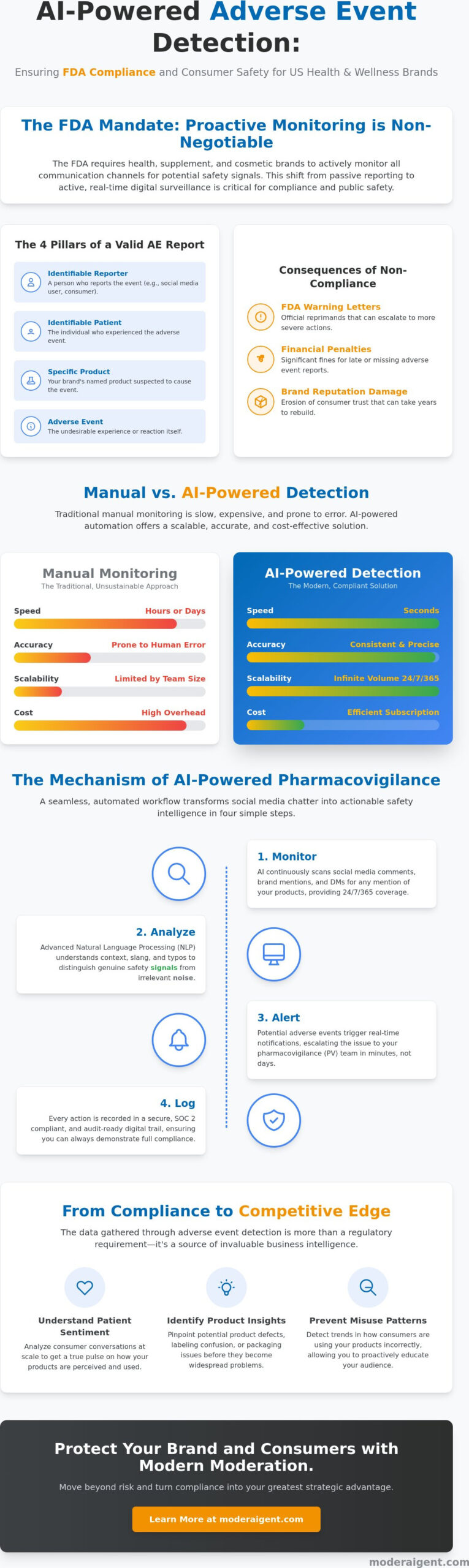
National FDA guidelines apply to all brands marketing health, wellness, supplement, and cosmetic products in the United States. This includes a legal obligation to monitor company-owned social media pages, comments, direct messages, and even brand mentions on public forums. For an adverse event to be considered valid and reportable, it typically must include four key elements: an identifiable reporter, an identifiable patient, a specific product, and a specific event or reaction.
Regulatory Consequences of Non-Compliance
Failing to detect and report adverse events in a timely manner can have severe consequences. The FDA can issue warning letters, mandate product recalls, or impose significant financial penalties. Beyond the direct costs, the reputational damage from a safety oversight can erode consumer trust and permanently harm a brand’s market standing. Maintaining “community integrity” by actively monitoring for and addressing safety concerns serves as a powerful shield against regulatory scrutiny and protects your most valuable asset: your customers.
The Mechanism of AI-Powered Pharmacovigilance
Modern adverse event detection leverages sophisticated AI to manage the immense scale of digital conversations. Using Natural Language Processing (NLP), the system can understand the intent and context behind casual social media language, identifying potential medical signals that a human might miss. This real-time processing is crucial; in safety reporting, every minute counts.
A key function of this technology is its ability to distinguish between “noise”—such as spam, general complaints, or unrelated comments—and true “signals” that indicate a potential adverse event. This combination of machine precision and human-centric safety goals is the core of “Modern Moderation,” creating a safer online space for your community while ensuring strict compliance.
- Natural Language Processing (NLP): Identifies medical signals and context within informal language.
- Real-Time Processing: Ensures immediate detection, which is critical for meeting strict FDA reporting timelines.
- Signal vs. Noise: Intelligently filters out irrelevant content to focus only on potential safety events.
- Modern Moderation: Blends automated precision with the ultimate goal of protecting consumer health and safety.
Automated Workflows and Seamless Integration
AI-powered detection software integrates directly with your existing social media management tools, creating a seamless workflow. When a potential adverse event is detected, automated alerts are sent to your pharmacovigilance (PV) or compliance team, dramatically accelerating the review and reporting process. This system maintains a secure, audit-ready digital trail of every detected signal and the actions taken, simplifying compliance and internal reviews.
Sentiment and Product Insights
Effective monitoring goes beyond just compliance. The data gathered provides invaluable insights into how consumers perceive and use your products. By analyzing sentiment, you can understand patient experiences on a deeper level. This intelligence can help identify product defects, common misuse patterns, or emerging consumer concerns before they escalate, turning a regulatory necessity into a powerful tool for business intelligence and product improvement.
Manual Monitoring vs. Automated Adverse Event Detection
While manual monitoring may seem like a straightforward approach, it carries significant hidden costs and risks. Relying on human teams for 24/7 coverage is expensive and prone to error, especially when faced with the high volume and velocity of social media. AI-driven systems, in contrast, offer a scalable, consistent, and cost-effective solution.
| Feature | Manual Moderation | Automated Detection |
|---|---|---|
| Speed | Hours or days to detect | Seconds to detect |
| Accuracy | Prone to human error and fatigue | Consistent, unbiased analysis |
| Scalability | Easily overwhelmed by volume spikes | Handles millions of comments effortlessly |
| Coverage | Limited by schedules and time zones | 24/7/365 continuous monitoring |
| Cost | High overhead (salaries, training) | Efficient subscription-based model |
Efficiency and Speed of Response
The difference in detection speed between AI and manual teams is stark: seconds versus hours or even days. An automated system acts as a “Tireless Guardian,” monitoring your digital channels 24/7/365 without fatigue or distraction. By automatically filtering out over 99% of irrelevant content, it drastically reduces the workload on your internal teams, allowing them to focus on investigating and reporting valid adverse events.
Cost-Benefit Analysis for US Brands
For founder-owned supplement and cosmetic brands, the financial calculation is clear. The cost of an automated, subscription-based solution is a fraction of the expense required to build and maintain an in-house, round-the-clock moderation team. When you factor in the immense cost of potential FDA fines and reputational damage, the return on investment from mitigating compliance risks becomes undeniable.
Building a Compliant Social Media Monitoring Workflow
Creating a robust and compliant workflow is essential for protecting your brand and your customers. An effective process ensures that potential adverse events are not only detected but also escalated and reported correctly every time.
- Define Safety Parameters: Identify your specific product names, ingredients, and keywords that need to be monitored.
- Deploy AI Monitoring: Activate automated monitoring across all your owned digital channels, including Facebook, Instagram, and X.
- Establish an Escalation Path: Create a clear, documented process for how confirmed adverse events are routed to the appropriate compliance or PV team for formal reporting.
- Audit and Refine: Regularly review the system’s performance and update monitoring parameters to align with any new products or changes in FDA and MoCRA regulations.
- Train Your Team: Ensure your marketing and community management teams understand the workflow and how to use the insights dashboard for proactive safety management.
Implementing FDA & MoCRA Social Media Guidelines
Your digital strategy must align with the latest regulatory intelligence from the FDA. This includes understanding the nuances of fair balance in promotional posts and ensuring user-generated content is handled compliantly. For cosmetics brands, the Modernization of Cosmetics Regulation Act (MoCRA) introduces new requirements for adverse event reporting, making automated monitoring more critical than ever.
Data Security and Content Integrity
A crucial part of any monitoring program is maintaining data privacy and protecting your community. The system should operate in compliance with US data privacy regulations while actively removing spam and harmful content. This not only ensures a safe environment for your audience but also protects your brand’s digital channels from misinformation, scams, and other bad actors that could undermine consumer trust.
Moderaigent: The Future of Digital Safety and Compliance
In a chaotic and unpredictable digital landscape, Moderaigent provides a stabilizing force. We offer a sophisticated, AI-powered platform that works silently in the background, giving you the freedom to grow your brand while we handle the risk. Our key features—real-time detection, regulatory reporting workflows, and sentiment dashboards—are designed specifically for the needs of US health, supplement, and cosmetic brands. We provide the tools you need to protect your community and your compliance with confidence.
Scale with Confidence
With Moderaigent, you can expand your social media presence without increasing your regulatory risk. Our “Vigilant Guardian” approach focuses on proactive protection rather than reactive cleanup, ensuring your brand is always prepared. See how our platform can be tailored to your specific products and channels.
A Partner in Modern Moderation
Focus on your brand’s creative growth and community engagement. Let us handle the digital “noise” and compliance burdens. Moderaigent represents the perfect synergy of human safety goals and machine-driven precision, giving you peace of mind in the digital age.